Fantasy Sports Application
Transforming Fantasy Sports Engagement Through Gamification And User Psychology
In this project, I will see how a multi-feature sports app attracts users, encourages daily participation, and differentiates itself from competitors like Dream11. Due to confidentiality and internal guidelines, the full process cannot be shown, but the case study highlights key features, design decisions, and user impact.
Category
Mobile Application
Client
10 Score
Year
Before the Redesign
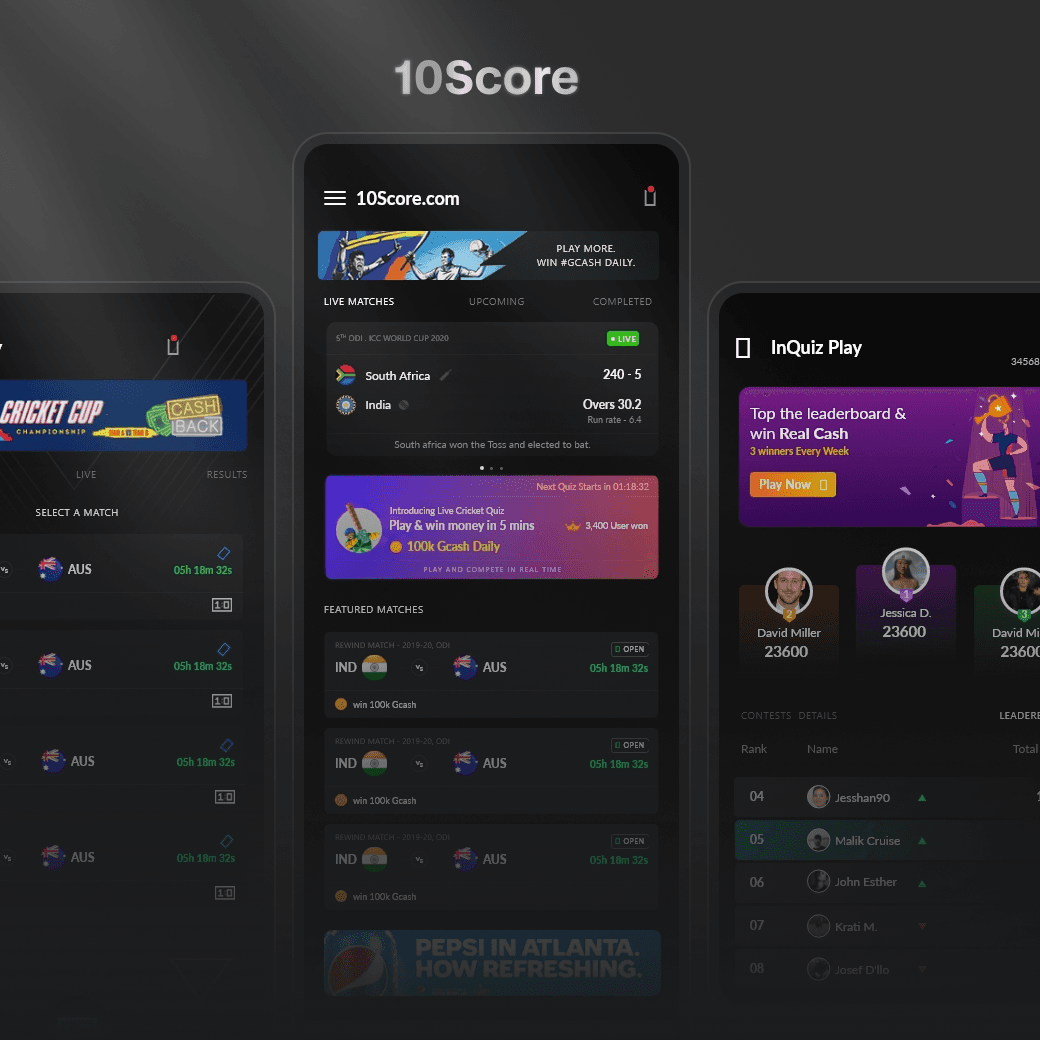
10Score launched as another fantasy sports app in India's saturated market, competing with established platforms like Dream11 and MPL. Users could predict match outcomes and join contests, but the experience felt cold and transactional. Our analytics showed the harsh reality: 2.3-minute average sessions, 12% seven-day retention, and users abandoning us after one or two attempts.
The interface was purely functional - basic match listings, prediction forms, and results. There was no emotional connection, no reason to stay, and certainly no compelling reason to choose us over competitors with years of market presence.
Why It Mattered
India's fantasy sports market was worth over $2 billion in 2024, but new apps failed weekly due to inability to differentiate beyond basic functionality. For 10Score, this wasn't just about improving features - it was about survival in a ruthless market where user attention is the most valuable currency.
The challenge required solving an emotional problem, not a technical one. Users needed a reason to care about our platform beyond just winning money, especially when every competitor offered similar odds and contests.
Project Overview
Timeline: 6 months
My Role: UX/UI Designer
Team: 2 designers, 1 PM, 4 developers
Goal: Transform user engagement and retention through human-centered design
Key Research Methods:
30 user interviews with fantasy sports enthusiasts
Competitive analysis of 12 major platforms
Behavioral analytics
User journey mapping workshops
Success Metrics Targeted:
User engagement rate (+25%)
Session duration (+40%)
User retention improvement
Onboarding completion rates
The Core Problem
User research revealed that our assumptions were wrong. We thought users wanted better odds or more contests. The real problem was emotional: users felt like "just another wallet" rather than recognized sports experts.
Key Insight from User Interview: "I know player statistics better than most commentators, but these apps make me feel like I'm just gambling. I want to feel smart about my predictions, not just lucky." - Rajesh, Engineering Student
Core Pain Points:
Lack of expertise recognition
Prediction anxiety and uncertainty
Purely transactional relationship
No sense of progression or community
Our Solution
I designed a comprehensive gamification system that transformed prediction anxiety into prediction confidence through four strategic pillars:
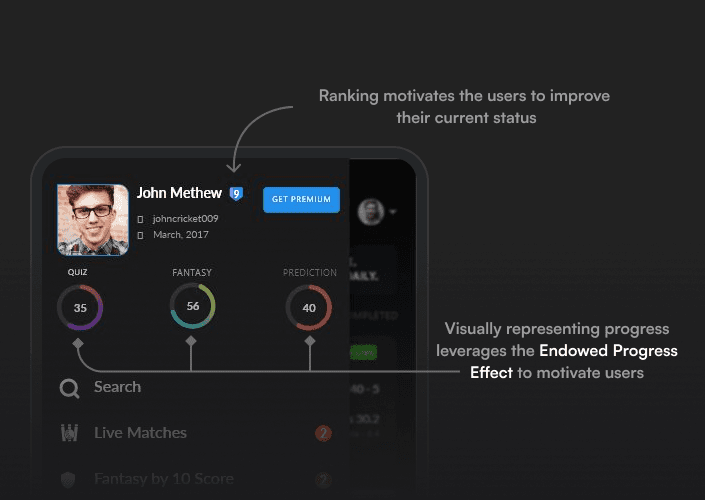
1. Player Progression System: Created multi-tier levels (Bronze → Gold → Diamond) that celebrate expertise growth, not just wins. Users advance based on prediction accuracy and platform engagement.
2. Coin Psychology Implemented : ₹1 = 10 coins system, allowing participation from just 100 coins (₹10). This reduced loss aversion - "spending 100 coins" feels less risky than "spending ₹10."
3. Knowledge-Based Engagement Added free quizzes and competitions that reward sports knowledge without financial risk, building user confidence before monetary investment.
4. Responsible Design Introduced user-controlled daily spending limits with transparent tracking, positioning 10Score as a trustworthy platform that cares about user wellbeing.

Emotional Shift
The design transformation created a fundamental change in user mindset and platform perception:
From Anxiety to Confidence:
"I hope I don't lose money" → "I'm building my sports analyst reputation"
"This feels like gambling" → "This recognizes my expertise"
"I'm just another user" → "I'm part of a community that values knowledge"
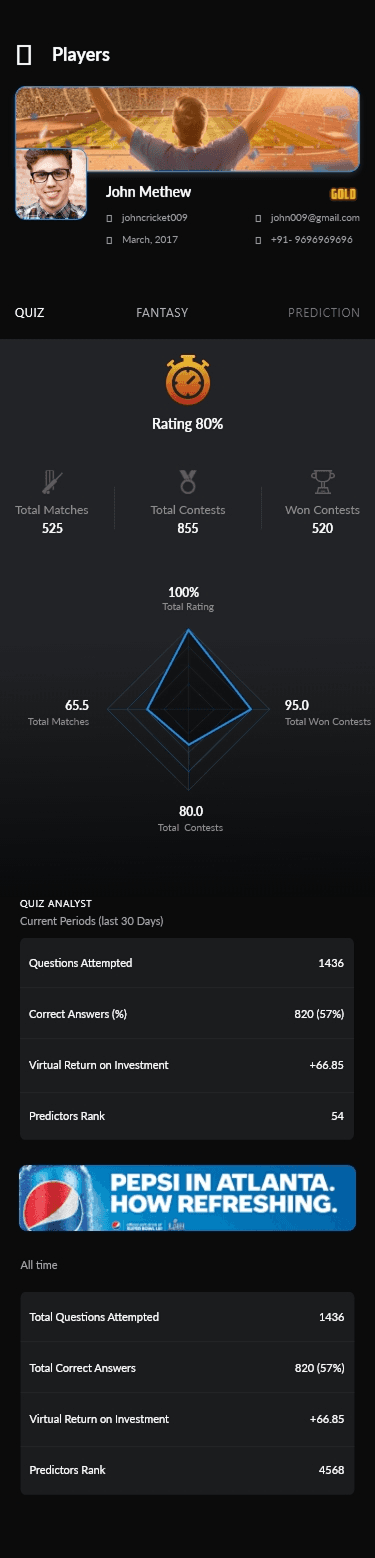
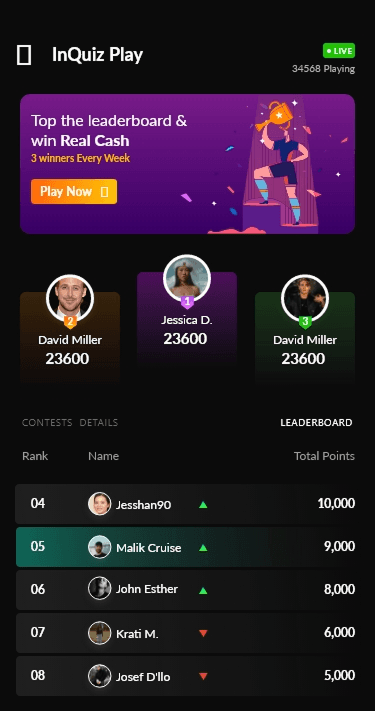
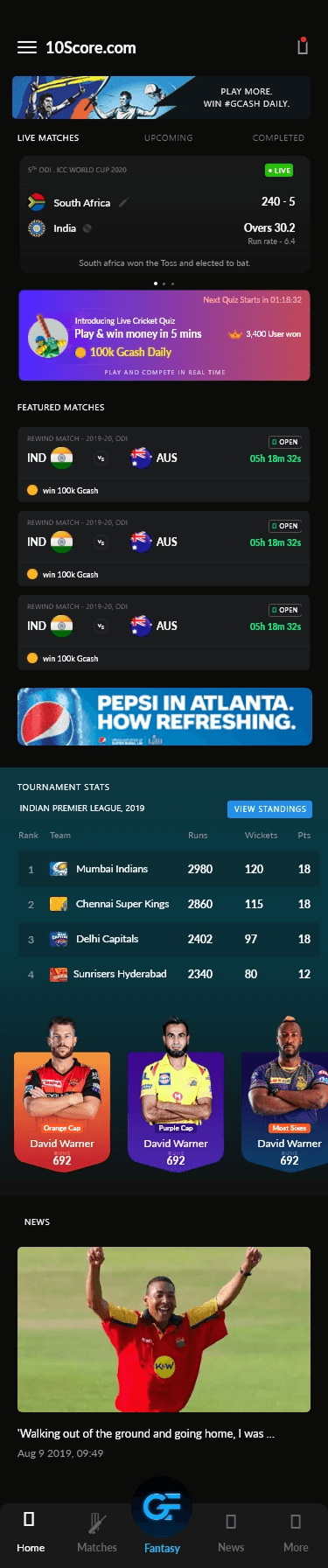
Key Screen Transformations: The home screen evolved from basic match listings to a personalized sports command center featuring user achievements and progress indicators. The profile screen became an achievement showcase with level indicators, performance radar charts, and quiz analytics that celebrated sports knowledge beyond just financial wins.
Potential Impact
During the 6 months 10Score was active in 2024, the redesign showed significant promise before market challenges ended operations:
Quantitative Results:
34.5% increase in user engagement
52% improvement in session duration (2.3 to 3.5 minutes)
67% better retention for Silver+ level users
28% increase in onboarding completion
Qualitative Transformation:
App store rating improved from 3.2 to 4.1 stars
User reviews shifted from complexity complaints to engagement praise
Organic community adoption without marketing push
Customer support interactions became more positive
The improvements positioned 10Score as a legitimate competitor and generated investor interest before external market factors affected operations.
Future Updates
Based on user feedback and behavioral data, our planned roadmap included strategic enhancements to deepen engagement:
Short-term Priorities:
Social features: friend challenges and collaborative predictions
AI-powered personalized insights and recommendations
Advanced performance analytics and improvement suggestions
What I Learned
Behavioral Psychology Works: The coin system proved that presentation significantly impacts user comfort and behavior. Gamification succeeds when it recognizes genuine human motivations rather than just adding superficial points and badges.
Market Reality Check: Even well-designed products need viable market conditions to succeed. 10Score's positive metrics couldn't overcome regulatory challenges and market forces that ended operations in late 2024.
Personal Growth: This project taught me that effective UX design requires understanding users as complete humans with emotions, fears, and aspirations - not just functional requirements to solve.